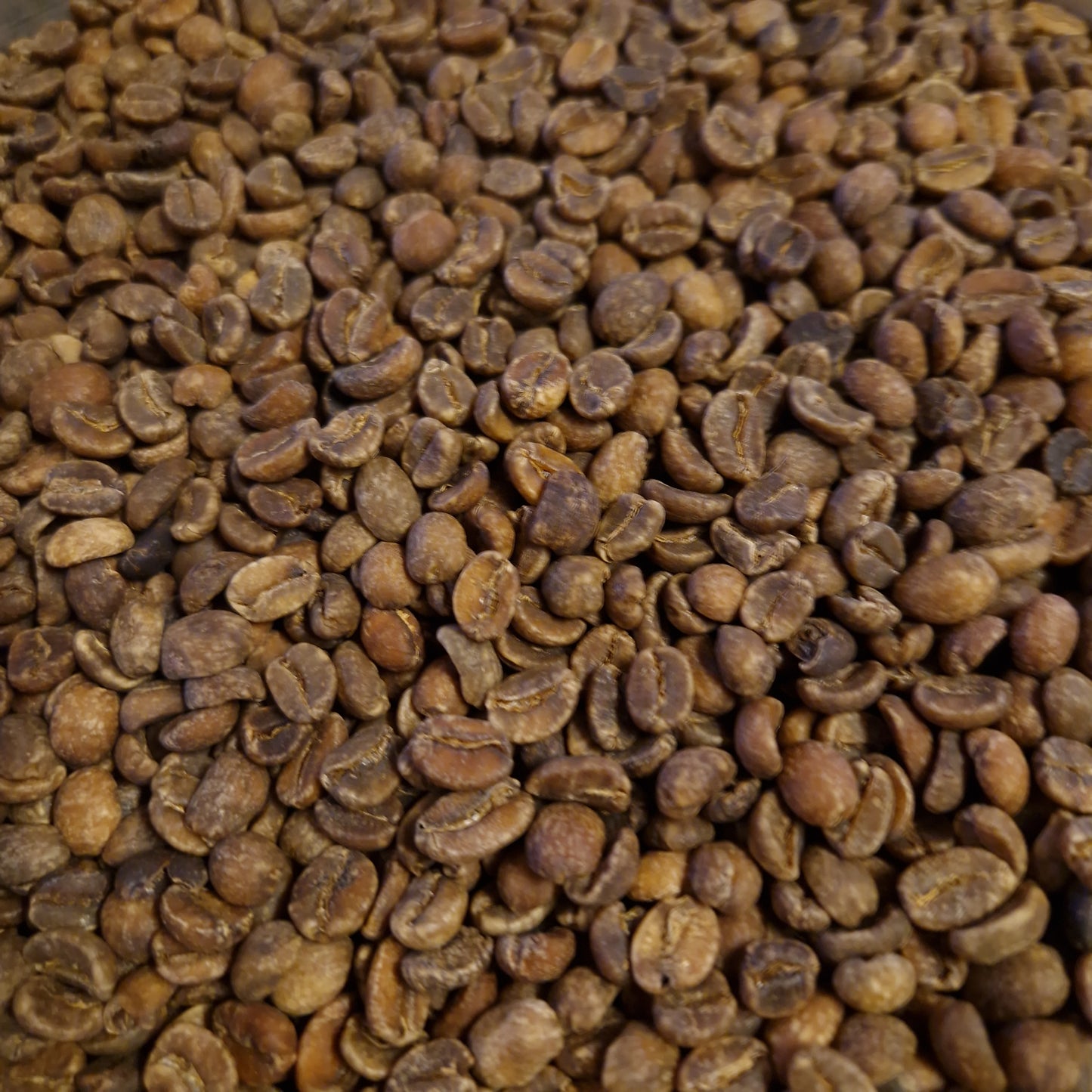
This coffee is grown in various municipalities in the department of Santander, in the North Eastern region of Colombia. The main growing areas for this coffee are located in the Eastern Cordillera or Mountain range.
The farms vary in size, ranging from 1 to 10 hectares. The region has diverse microclimatic conditions to grow high quality coffee. Santander is a pioneer in coffee and one of the oldest traditional coffee growing regions in Colombia.
During the early 1850’s it was the most important producing region in the country. This area has high altitudes ranging from 1,300 to 1,750 meters, generous water resources, and soil rich in minerals. It has been recognized as one of the top-quality coffee producing areas in Colombia.
Municipalities where these farms are situated throughout the department include: San Gil, Curiti, Paramo, Barichara, Valle de San Jose, Pinchote, Mogotes, Zapatoca, Piedecuesta,
Socorro, Oiba, Palmas del Socorro, Velez, Barbosa and Puente Nacional.
Decaffeination
EA decaffeination is a natural process that maintains the integrity of green-coffee flavour. Ethyl acetate comes naturally in many fruits, which is why this method is often referred to as natural decaffeination. First, sugars from \sugarcane are fermented to create ethyl alcohol. Second, the ethyl alcohol is mixed with acetic acid; the result is ethyl acetate.
The EA process begins with a pre-treatment step of steaming beans at a low pressure to remove silver skins. Coffee is then moistened with hot water to swell and soften the beans to catalyse the hydrolysis (the chemical breakdown of a substance due to reaction with water) of the caffeine, which is bonded to chlorogenic acid inside the coffee. The EA process gently extracts the caffeine from coffee beans, avoiding the use of excessive heat that could damage the structure of the beans.
Then, coffee passes to an extractor, where caffeine is removed by repeatedly washing with the natural solvent ethyl acetate. This process happens several times to complete the extraction stage, removing more than 97% of caffeine. This process creates a weight loss of around 3% of the weight of the green coffee; we need to have 60bags of 70kg to get 58bags of 70kg decaf green coffee.
Once caffeine extraction is complete, a flow of low-pressure steam is passed over coffee to strip residual ethyl acetate, which evaporates at 70°C once coffee beans are roasted. Lastly, the coffee, now decaffeinated and free from ethyl acetate, is vacuum-dried until the moisture content of the coffee is brought back to the moisture level at which it was when it arrived at the EA processing facility – typically between 10-12% "